Iklan - Scroll untuk Melanjutkan
Baca artikel Fortune IDN lainnya di IDN App
It helps you see more of our articles when you search on Google
IDN CEO Winston Utomo Asks Indonesia’s Young Generation to Stay Optimistic
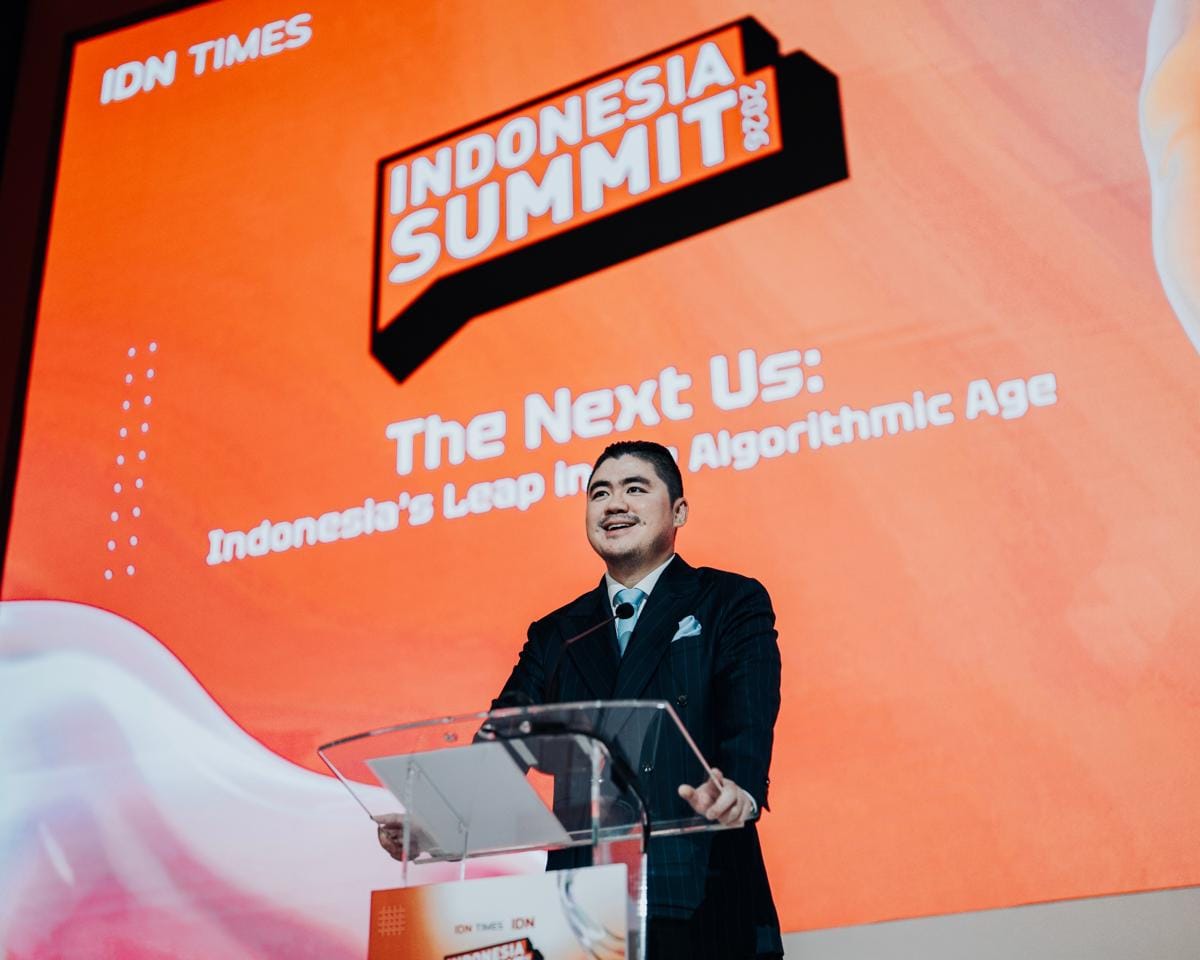
CEO IDN, Winston Utomo dalam Indonesia Summit 2026 di Jakarta, 17 Juni 2026

Jakarta, FORTUNE - Amid global economic uncertainty, technological disruption, and rapid social change, optimism can seem increasingly difficult to sustain. Yet for Winston Utomo, CEO of IDN, optimism is not a denial of reality. It is a deliberate choice—and an essential force for shaping the future.

Winston delivered this message while opening Indonesia Summit 2026 by IDN Times in Jakarta on Wednesday, 17 June 2026. Addressing leaders, policymakers, industry players, and Indonesia’s young generation, he urged the audience to face the future with courage and conviction.

Not because the challenges are small, but because the opportunities within them are greater.

“In a world with a thousand reasons to be pessimistic, we gather here today to remain optimistic about Indonesia. Optimism is not about closing our eyes to reality. It is about choosing to see challenges as opportunities rather than obstacles,” Winston said.

The moment carried particular significance as IDN marked its 12-year journey. Founded by Winston and his brother, William Utomo, on 8 June 2014, IDN began with a simple dream shared by two brothers. Today, it has grown into an integrated media, entertainment, and technology ecosystem built around one central mission: empowering Indonesia’s young generation.

In his opening address, Winston outlined three reasons why he remains deeply optimistic about Indonesia’s future.

Indonesia’s Demographic Bonus: A Once-in-a-Generation Opportunity

The first is the extraordinary scale of Indonesia’s young population.

Approximately 194 million Indonesians are Millennials and Gen Z, representing nearly 68 percent of the country’s population. Few nations possess a demographic advantage of this magnitude.

But Winston cautioned that demographics alone do not guarantee progress. A large productive population becomes a national strength only when matched by strong human capital, discipline, resilience, and a willingness to keep learning.

He called on Indonesia’s young generation to develop the work ethic, adaptability, and intellectual curiosity required to thrive in a world that is changing faster than ever.

“Millennials and Gen Z are not spectators of the future. We are the authors of that future.”

For Winston, Indonesia’s greatest long-term advantage lies not only in its abundant natural resources or strategic geography, but in the quality, character, and ambition of its people. The decisions made by today’s young generation will determine the country Indonesia becomes in the decades ahead.

Indonesia Summit 2026 yang digelar IDN Times di Jakarta, 17 Juni 2026

The Creative Industry as Indonesia’s Next Growth Engine

Winston’s second source of optimism is Indonesia’s rapidly expanding creative economy.

As the leader of a company operating across media, entertainment, technology, and the creator economy, he sees the creative sector as far more than a cultural industry. It has the potential to become a powerful engine of economic growth, employment, innovation, and global influence.

Around the world, nations increasingly build their relevance not only through economic scale or technological strength, but through the stories, music, films, ideas, and cultural movements they export.

Creative work can cross borders, shape perceptions, and strengthen a country’s position on the global stage.

Indonesia possesses the foundations to do the same: a vast domestic market, extraordinary cultural diversity, and a growing generation of creators with the talent and ambition to compete globally.

The opportunity, Winston argued, is for Indonesia to evolve from being primarily a consumer of global culture into a producer of world-class intellectual property and creative work.

“Imagine if Indonesia did not only consume content, but exported it. Imagine if we did not only follow global trends, but created the trends the world follows.”

As digital technology continues to transform how content is created, distributed, and monetized, Winston believes creativity will become one of Indonesia’s most valuable strategic assets.

The countries that succeed in the future will not merely be those that manufacture products. They will also be those that create ideas, stories, and cultural influence at scale.

The Nationalism of Young Indonesians as Social Capital

Winston’s third reason for optimism is the level of engagement Indonesia’s young generation demonstrates toward the future of the country.

Citing research from the IDN Research Institute, he noted that nearly 70 percent of young Indonesians actively express their views on issues they care about—almost twice the level recorded among previous generations.

For Winston, this engagement challenges the perception that younger generations are apathetic or disengaged.

On the contrary, they are paying close attention to the issues that will define Indonesia’s future: education, economic opportunity, social equality, environmental sustainability, and the strength of the country’s democracy.

“Without a strong sense of nationalism among the young generation, it is very difficult for a country to advance. We are fortunate that Indonesia’s young generation is not silent.”

Their willingness to speak, participate, question, and contribute represents an important form of social capital.

When channelled constructively, this energy can become a powerful force for institutional improvement, social progress, and national transformation.

The Future Must Be Created Together

In closing, Winston emphasized that no meaningful national transformation can be achieved by one individual, one institution, or one generation alone.

Indonesia’s tradition of gotong royong must be reimagined for the modern era—as collaboration across generations, industries, regions, disciplines, and perspectives.

Through Indonesia Summit, IDN seeks to create a platform where leaders, policymakers, entrepreneurs, academics, creators, and young Indonesians can exchange ideas and work toward a shared vision of the country’s future.

Because the future, Winston said, is not something that simply arrives.

It is something people must have the courage to build.

“The future is not something we wait for. The future is something we must create—starting today, together with all of Indonesia’s young generation.”

The message reflects the conviction that has guided IDN since its founding: that empowering young people is not only a business mission, but a national imperative.

Indonesia’s progress may not come through one dramatic breakthrough. It will be built through millions of decisions, ideas, actions, and acts of courage — repeated consistently over time.

Curated For You

Editorial Team

Related Article